

Bitcoin Cash
Official Website: bitcoincash.org
Bitcoin Cash (BCH) emerged from a fork of Bitcoin in August 2017, primarily to address scalability concerns by increasing the block size limit — initially from 1 MB to 8 MB, and since raised to 32 MB — allowing more transactions to be processed per block.
This alteration was intended to facilitate faster and cheaper transactions, making it more practical for everyday use. Like Bitcoin, BCH operates on a decentralized network using blockchain technology, but it promotes itself as "Bitcoin with bigger blocks" to differentiate from its predecessor by focusing on broader transaction throughput.
Addresses
We automatically generate new Bitcoin Cash addresses after each use for better privacy. Previous addresses continue to work.
Bitcoin Cash uses the CashAddr address format. Your receive address begins with q, followed by a series of alphanumeric characters. CashAddr addresses are sometimes shown with a bitcoincash: prefix; with or without that prefix, the address is the same.
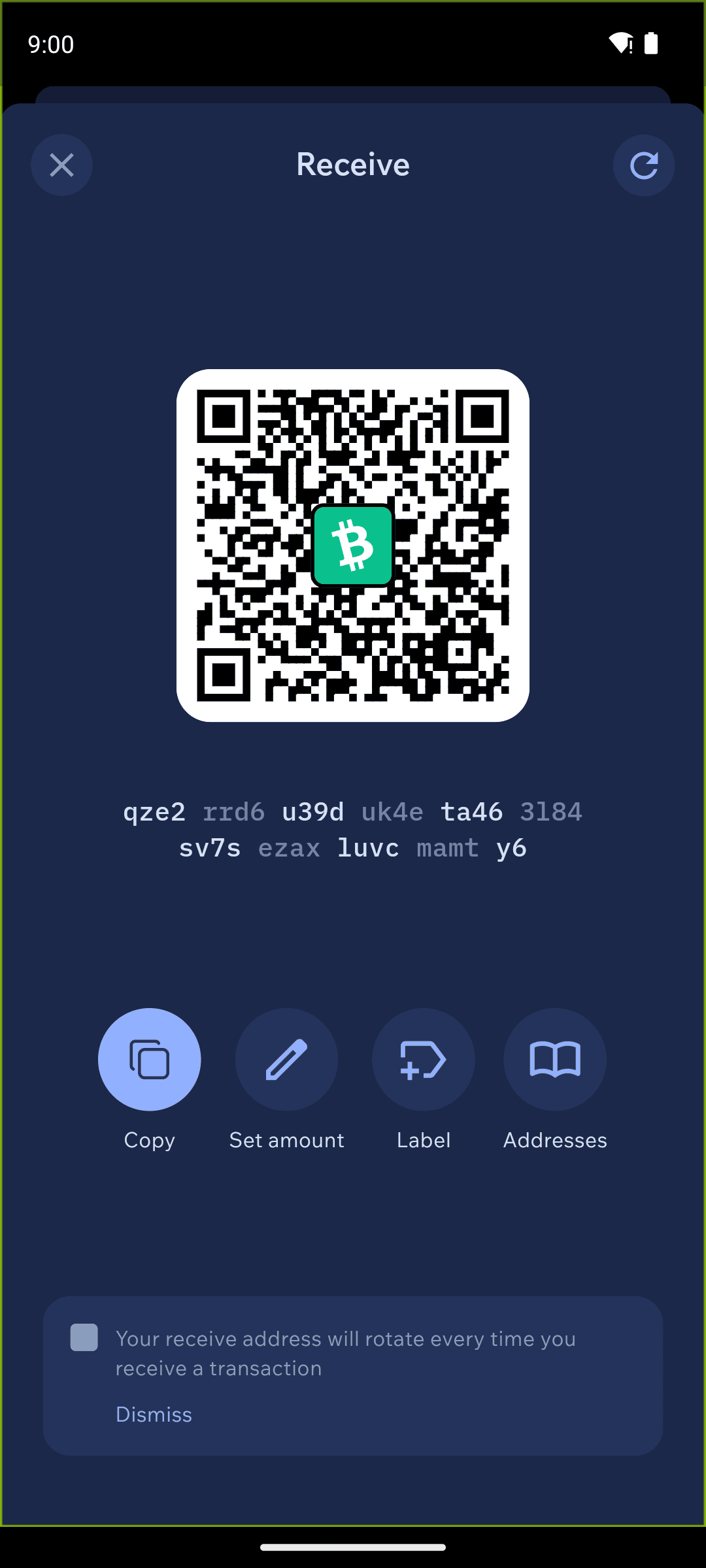
Bitcoin Cash wallets are derived from the BIP44 account root m/44'/145'/0'. The full paths are m/44'/145'/0'/0/x for receive addresses and m/44'/145'/0'/1/x for change addresses. This is not the Electrum m/0' scheme that Cake Wallet uses for Electrum-seed Bitcoin and Litecoin wallets.
Seed format
Cake Wallet creates Bitcoin Cash wallets with a 12-word BIP39 seed by default. Under Advanced Settings on the wallet creation screen you can choose a 24-word BIP39 seed instead, and you can add a seed passphrase.
Your BIP39 seed can be shared with your other Cake Wallet currencies as part of a wallet group.
Fees
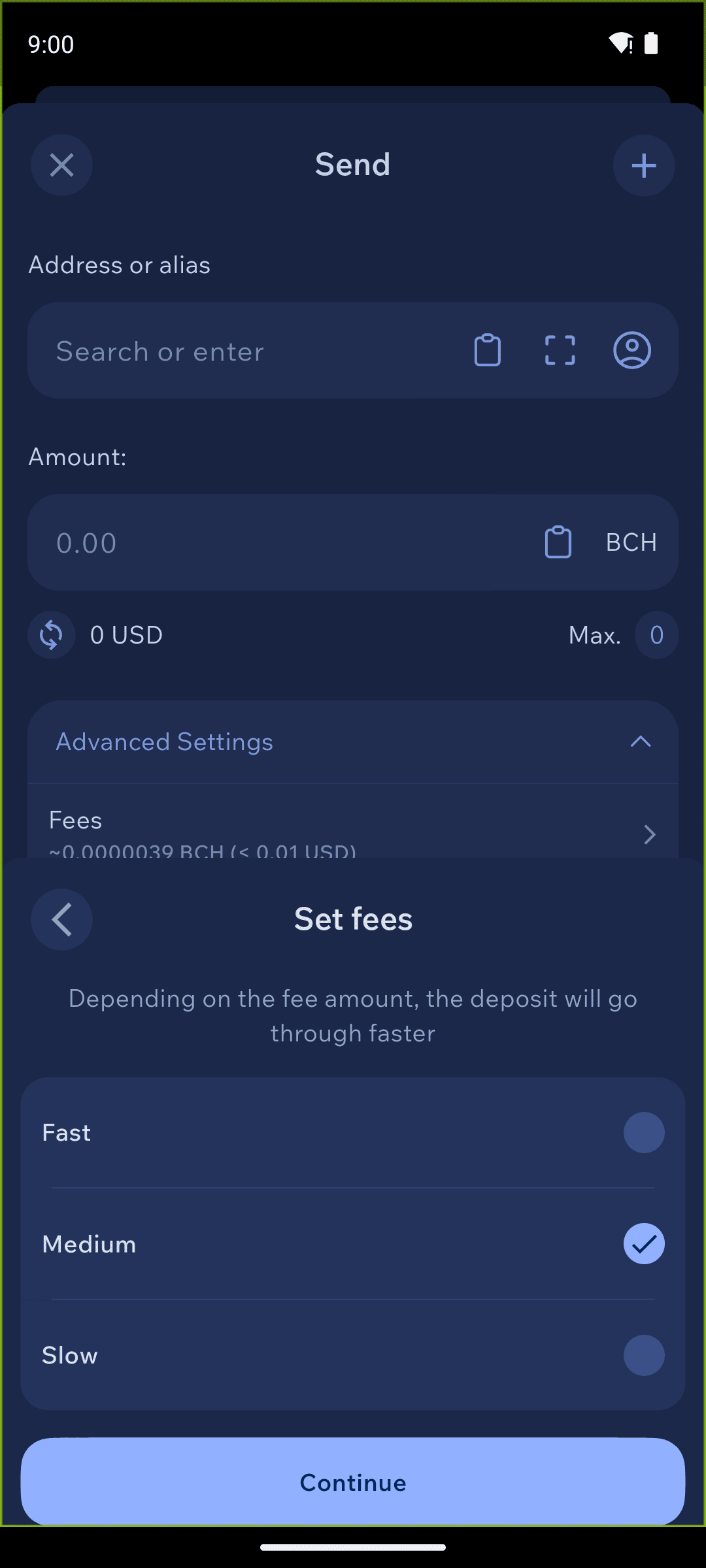
Bitcoin Cash network fees are paid in BCH. Cake Wallet offers three fee levels:
Slow: Cheaper but may take longer to confirm.
Medium: Recommended for most transactions. Balanced speed and cost. This is the default.
Fast: Expensive but confirms quickly.
There is no Custom fee option for Bitcoin Cash — that is Bitcoin-only. Bitcoin Cash fees are typically very low.
Coin control
Bitcoin Cash supports coin control, which lets you choose exactly which coins (unspent outputs) you spend in a transaction. This gives you finer control over your privacy and your fees.