

Payjoin
Every blockchain surveillance company leans on one assumption: all the inputs in a Bitcoin transaction belong to the sender. Payjoin quietly breaks it. In a Payjoin, the receiver contributes an input too — so the transaction looks ordinary on-chain, but the assumption behind most address clustering is simply wrong.
The best part: every Payjoin makes that surveillance assumption a little less reliable for everyone, even people who never use it.
Why v2 matters
Early Payjoin required the receiver to run a server and be online at the exact moment of payment — fine for merchants, useless for everyone else. Cake Wallet implements Payjoin v2, which works asynchronously: sender and receiver don't need to be online at the same time, and neither needs a server. It just works between two compatible wallets.
Turn it on
Open Settings → Wallet settings → Privacy on a Bitcoin wallet and enable Use Payjoin.
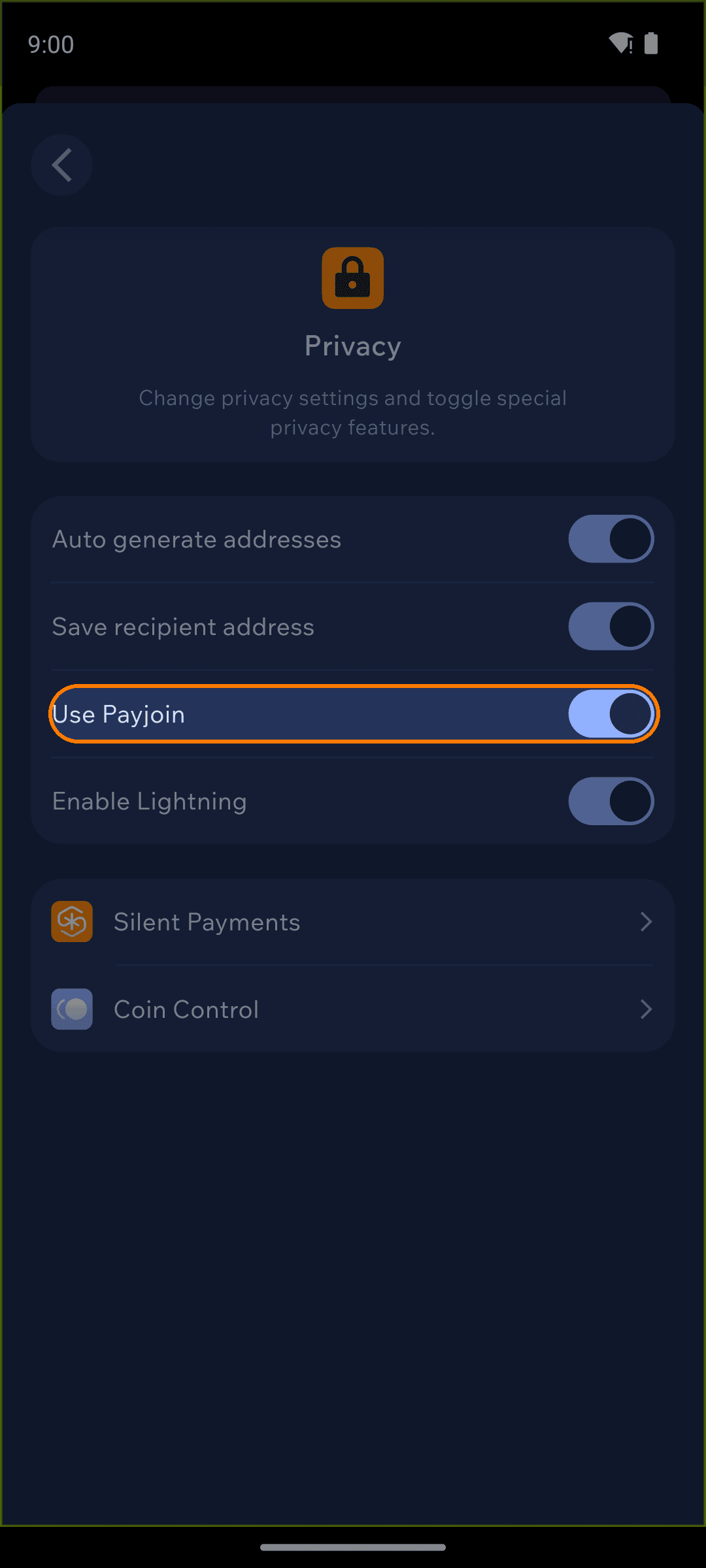
Payjoin is available on Bitcoin wallets on mobile (Android and iOS).
Receiving with Payjoin
Once enabled, your Receive screen shows a Payjoin enabled badge under the QR code — the QR now carries your address and the Payjoin link in one scan. Share it (or tap Copy) like any normal payment request. If the sender pays with a Payjoin-compatible wallet, the Payjoin happens automatically; if not, their payment arrives as a completely normal transaction. Nothing is lost by sharing it.
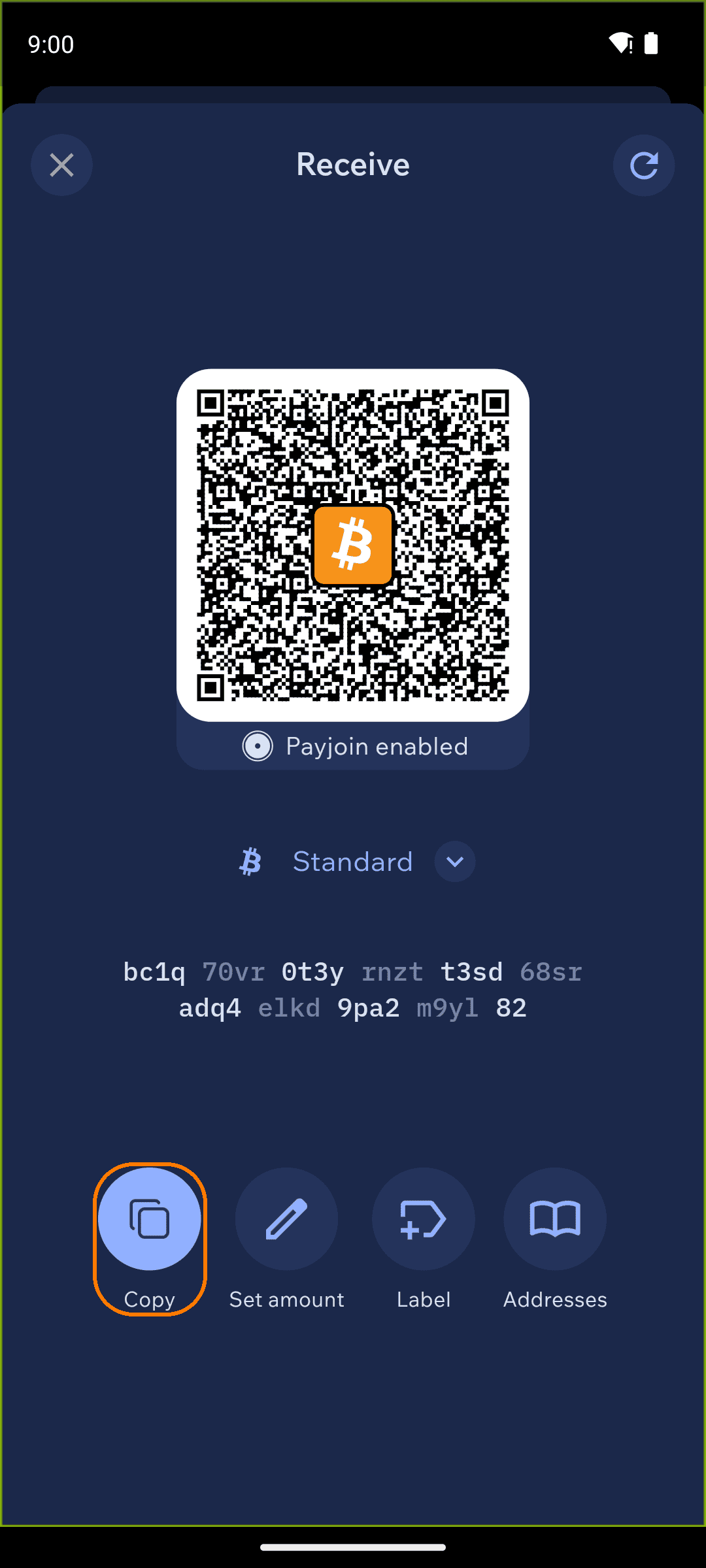
Payjoin needs an input from your side, so it becomes available once your wallet holds some Bitcoin. A brand-new, empty wallet receives normally until then.
While a Payjoin is in flight you'll see its state in the app (awaiting the sender's transaction, then in progress) — no action needed from you.
Sending to a Payjoin link
Paste or scan the recipient's Payjoin link in the Send screen and send as usual. Cake Wallet handles the Payjoin negotiation behind the scenes, and if it can't complete for any reason, your payment falls back to a standard transaction — the recipient always gets paid.
What to expect
Fees are normal. Both sides pay ordinary network fees; Payjoin adds no premium.
On-chain, nothing looks special. That's the point — observers can't reliably tell a Payjoin from a regular payment.
Both wallets must support it for the privacy benefit; otherwise payments gracefully fall back to standard sends.
Learn more
For the deeper story on how Payjoin works and who supports it, see payjoin.org.